

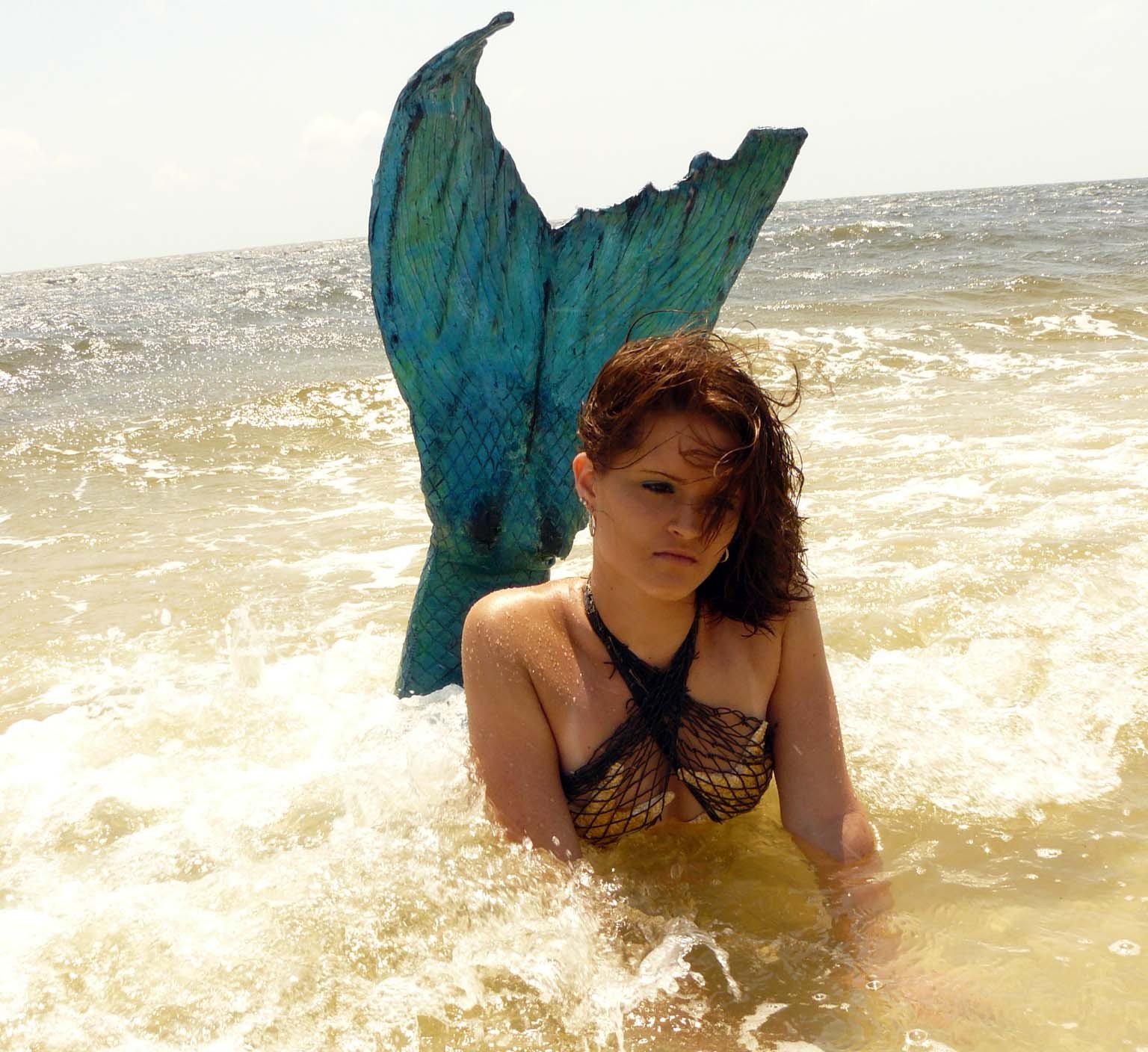
2008
Early experiments in creating a more realistic
mermaid tail.
Before there was Mertailor, there was a kid in Florida who desperately wanted to know what it felt like to have a mermaid tail.
That probably would have been the end of it. It wasn't.
Florida · 1990 → TodayGarbage bags. Fabric. Duct tape. Whatever could be wrapped around two legs and vaguely resemble a mermaid tail was worth trying.
Eric Ducharme's fascination with mermaids began years before there was a company to attach it to. Growing up in Florida, Weeki Wachee and its underwater performers made the impossible look completely believable.
By six, Eric wasn't content simply watching mermaids. He was trying to figure out how to become one.
There wasn't a business plan. There wasn't a product line. There was just a kid trying to figure out how to turn two legs into a tail.
And he never really stopped.
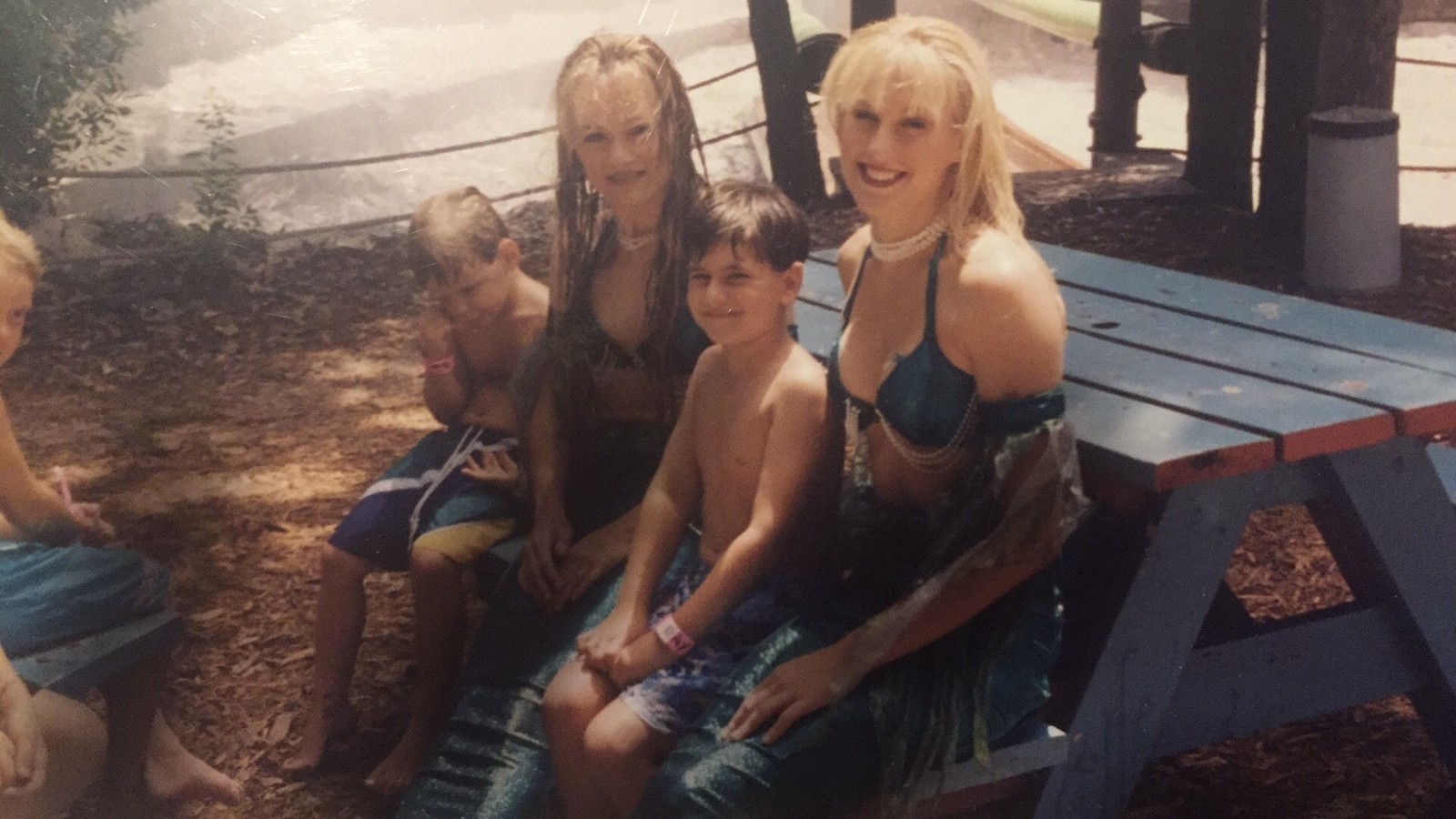
Weeki Wachee wasn't simply somewhere Eric visited. It became part of the way he understood mermaids: swimming, costuming, performance, illusion and the strange magic of seeing something through underwater glass and believing it for a moment.
Somewhere between watching those performances and experimenting at home, the question became less “What if mermaids were real?” and more “How do I make this?”
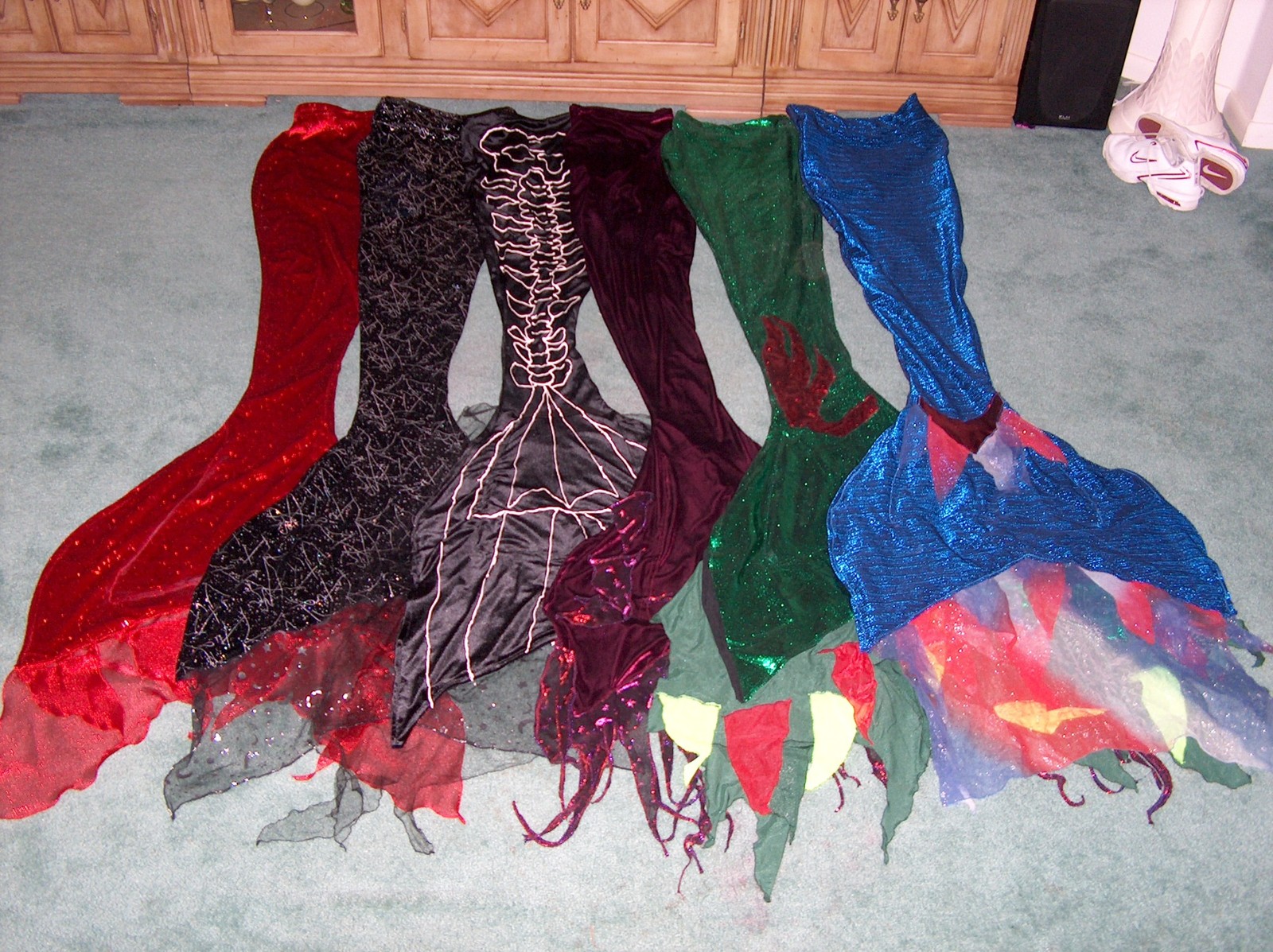
Fabric opened up an entirely new world.
Around eight years old, Eric began learning to use a sewing machine. The homemade experiments could now become actual wearable tails.
His grandmother was part of those early years, helping him learn to sew and making some of the first fabric tails with him.
Every new tail became another chance to figure out what worked, what didn't and how to make the next one a little better than the last.
By around nine years old, Eric was already making tails on his mother's enclosed back porch.
There were no production systems or professional equipment. Just fabric, a sewing machine, a growing pile of experiments and an increasingly determined kid trying to make the next tail better than the last.
Eric had already been making mermaid tails for years. Then, at thirteen, he decided he wanted to turn what he was doing into a business.
He was home sick, sitting at his mother's office, when he told her what he wanted to do.
Around that time he had already come up with the name The Mertailor Eric Ducharme.
On November 27, 2003, the website that would become TheMertailor.com was under construction.
The tails had already been happening for years. Now they had a name—and soon, a place for the rest of the world to find them.
By his mid-teens, Eric wasn't making the occasional mermaid tail after school. He was producing costumes, filling orders and working inside the world that had inspired him in the first place.
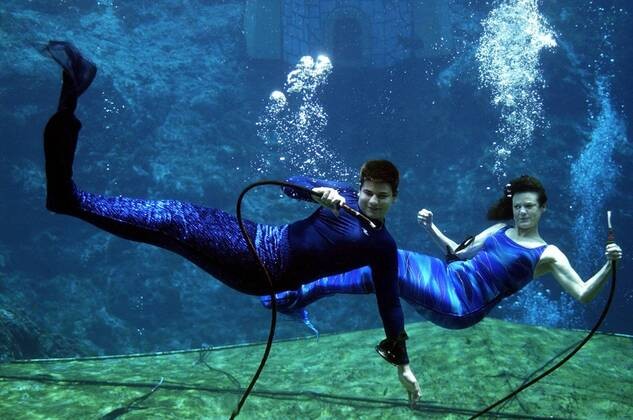
Eric began making underwater costumes and tails for Weeki Wachee Springs—the attraction he had been visiting since childhood.
A major order from Weeki Wachee called for fourteen mermaid tails. Another fourteen-tail order followed around the next year.
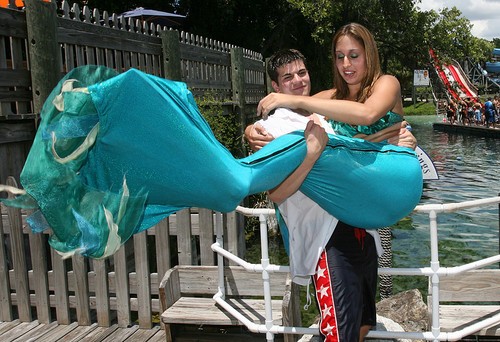
At sixteen, Eric was hired as a performer at Weeki Wachee while Mertailor continued growing. Calling it a hobby by that point would have been a little ridiculous.
Eric moved into the home that had belonged to his grandmother and created a dedicated shop there. The operation was still small, but it had already moved well beyond the back porch.
The kid who grew up watching Weeki Wachee's mermaids was now making tails for the attraction and performing there himself.
It would not be the last time the story came unexpectedly full circle.
Eric wanted the tails to look real.
Fabric had taken Mertailor a long way, but eventually it wasn't enough. Eric became convinced there had to be a better way to create the realism he could see in his head.
That pursuit pushed the work into new materials, new construction methods and increasingly complex experiments. The goal was no longer simply to make something shaped like a mermaid tail.
It needed to look like it belonged underwater.
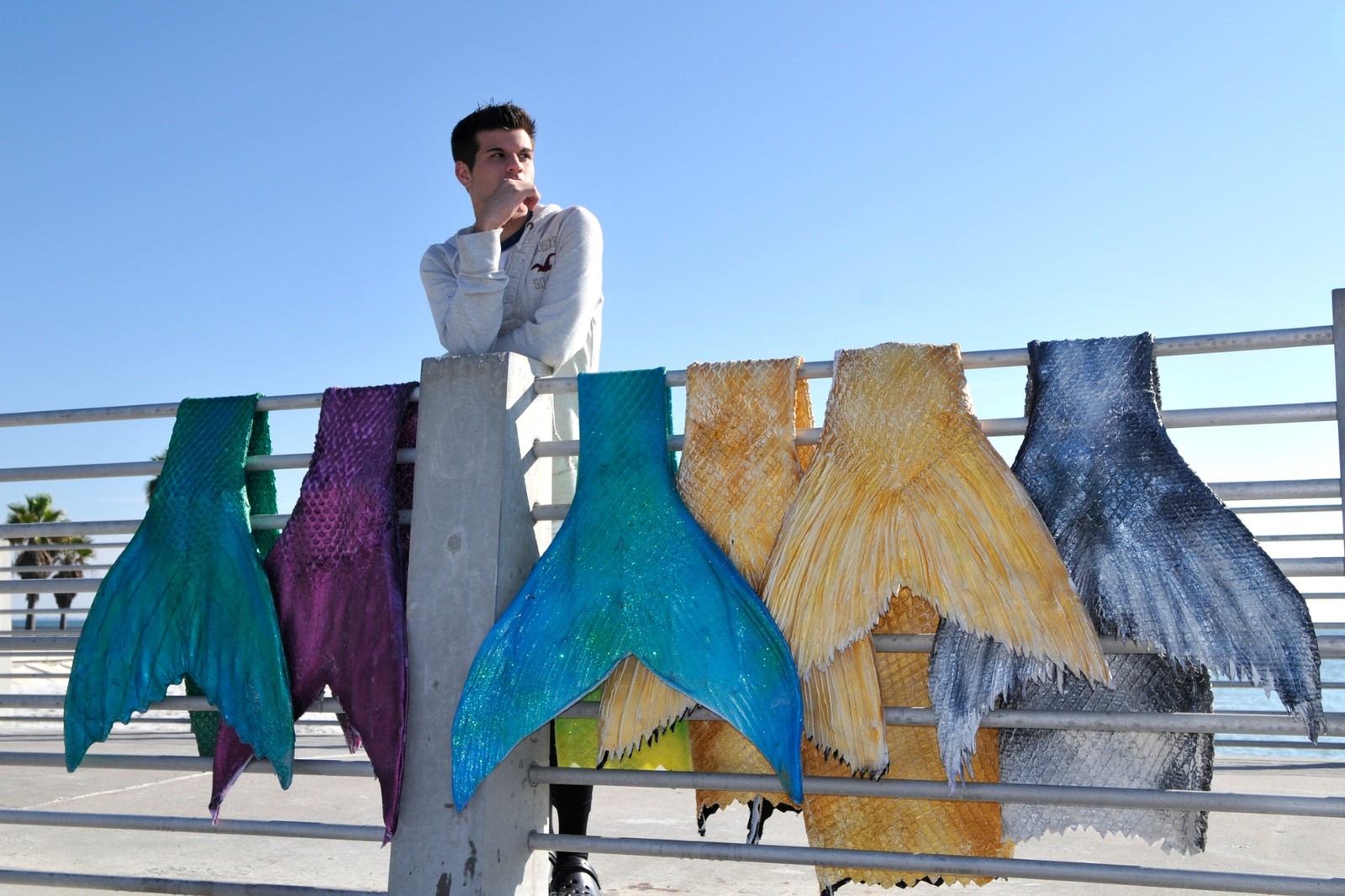
Around nineteen, Eric began moving into silicone. It opened an entirely different world of possibilities: sculpting, molding, texture, dimensional detail, flexible fins and increasingly realistic finishes.
There wasn't one magical tail where everything was suddenly figured out. Like everything before it, silicone became another process of making, swimming, testing, changing and making again.
The tails would continue evolving dramatically over the years that followed.
Mertailor didn't begin in a polished production facility. It grew into one.
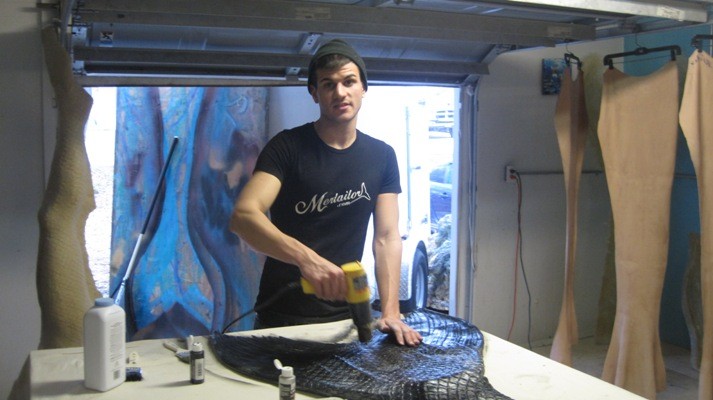
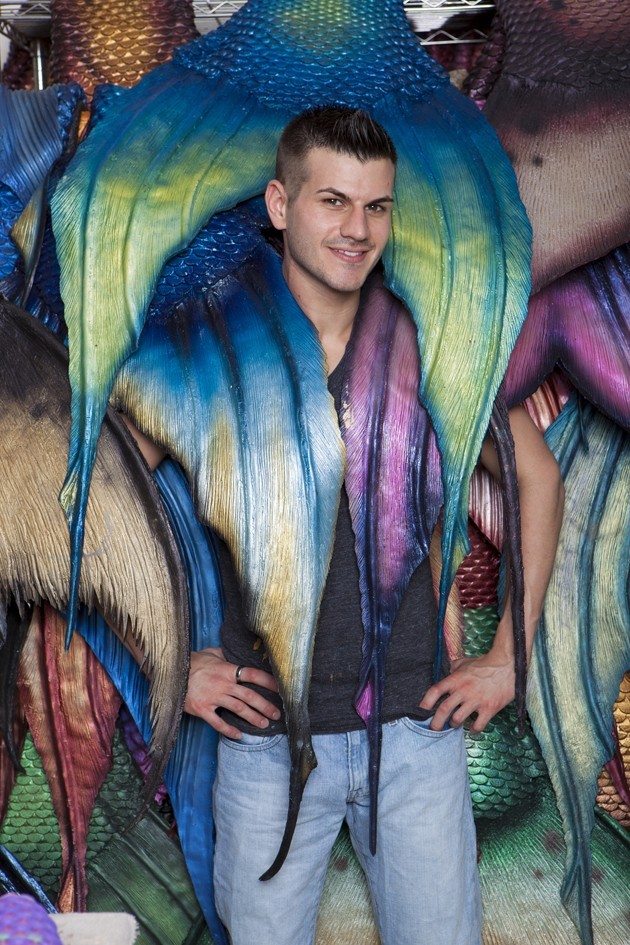
Making a mermaid tail look convincing was only part of the problem. How it moved through the water mattered just as much.
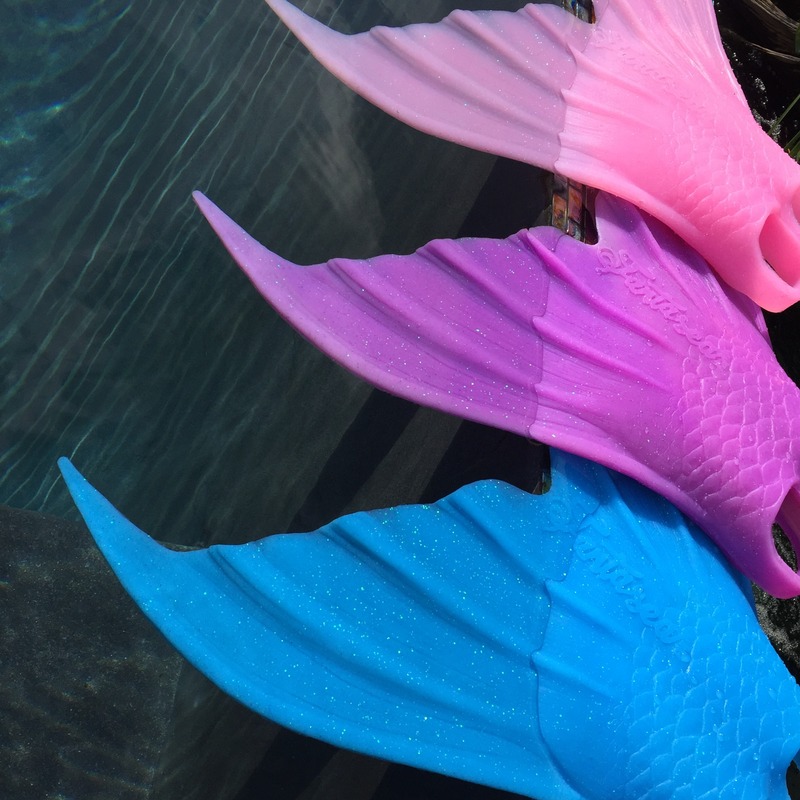
Years of working with monofins and mermaid tails led Eric to develop the Flowing Fin System: a fin designed to combine propulsion with the soft, flowing movement he wanted a mermaid tail to have.
The invention claimed priority in 2017 and ultimately became U.S. Patent No. 10,350,457.
The technology became part of the foundation for Mertailor's Fantasea Fin family and marked another change in the story: Eric wasn't only figuring out how to build mermaid tails anymore.
He was inventing what went inside them.
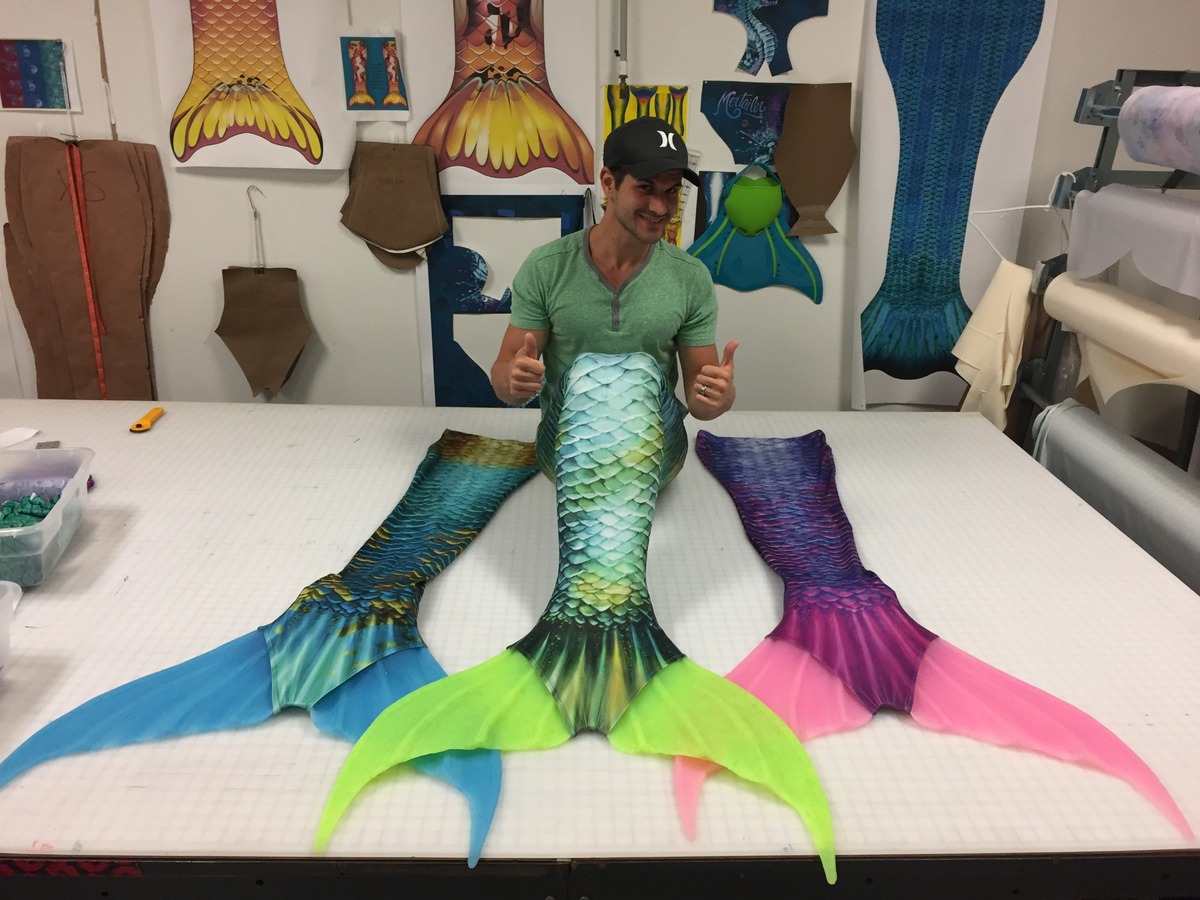
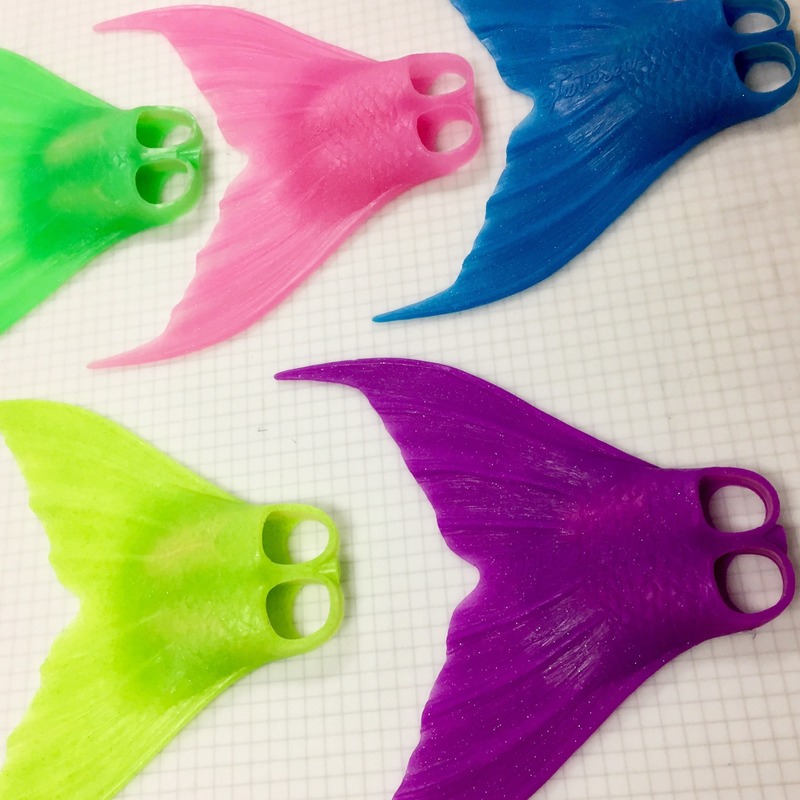
By 2018, the experiments that had begun with fabric, tape and a sewing machine had evolved into something almost unrecognizable from where they started.
This became one of Eric's signature silicone tails: sculpted, molded, painted and built with the kind of detail he had spent years trying to achieve.
It wasn't the beginning of Mertailor's silicone work. It was a snapshot of how far that work had come.
The idea never changed. The tail did.
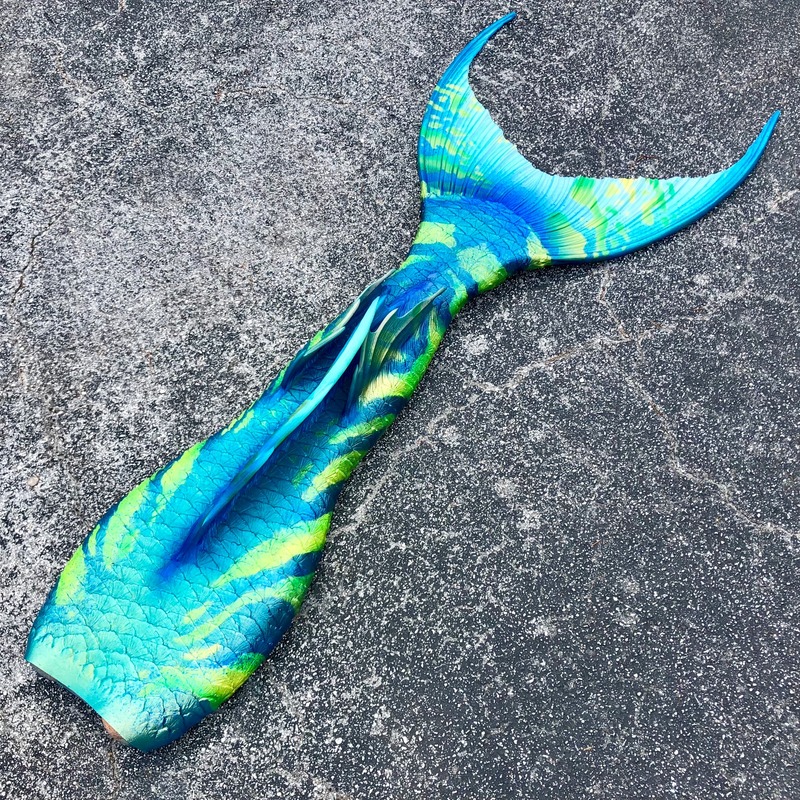
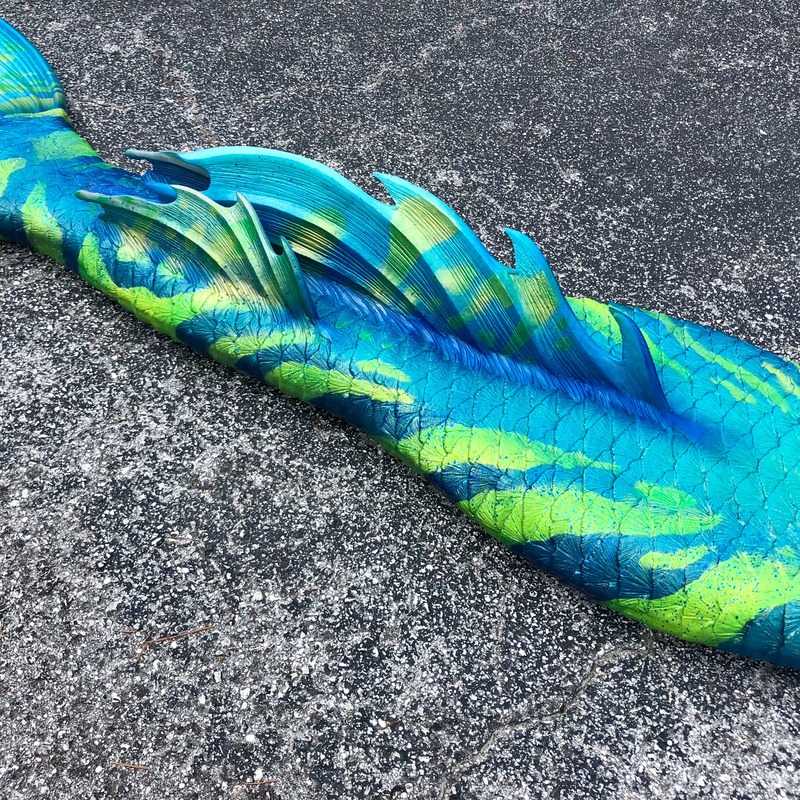
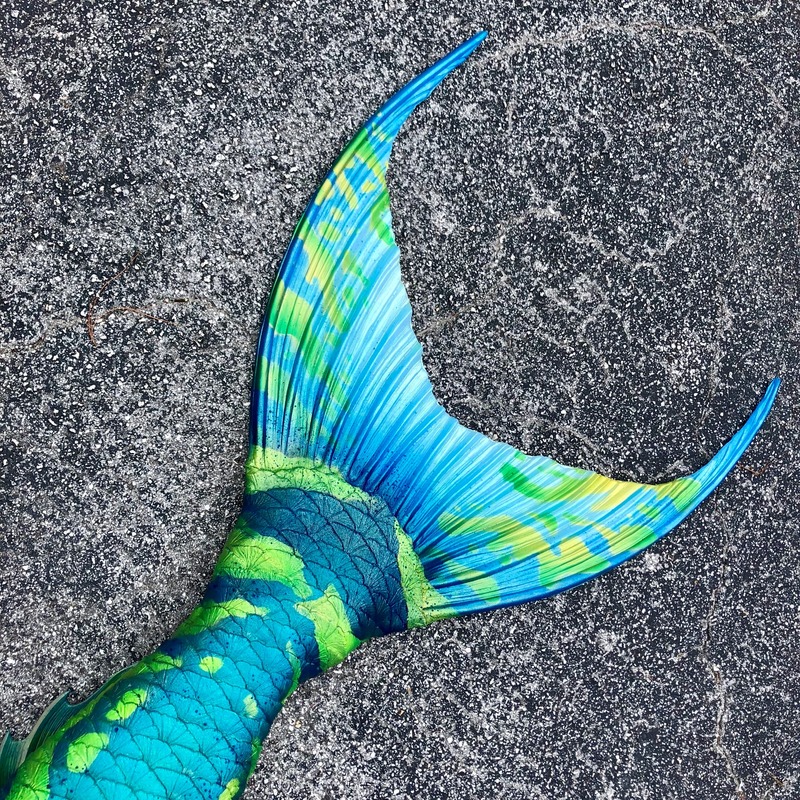
Television. Film. Music videos. Fashion. Advertising. Resorts. Aquariums. Live entertainment.
Over the years, Mertailor tails appeared on screens, stages, magazine pages and underwater around the world.
That part of the story has become an archive of its own.
Eric may have started making tails himself, but Mertailor didn't stay a one-person operation.
His mother, Candy, was there in the early years, helping with the books while running her own company. By the time Eric was around sixteen, she had become increasingly involved in production as the number of tails being made continued to grow.
Over the years, family, seamstresses, artists, makers, performers and team members became part of the strange little mermaid-tail business that wasn't so little anymore.
Eric's husband, Tomas, became one of its biggest supporters—eventually taking on logistics and shipping, helping wherever he was needed behind the scenes and, later, becoming deeply involved in the construction and development of Mertailor's biggest leap yet.
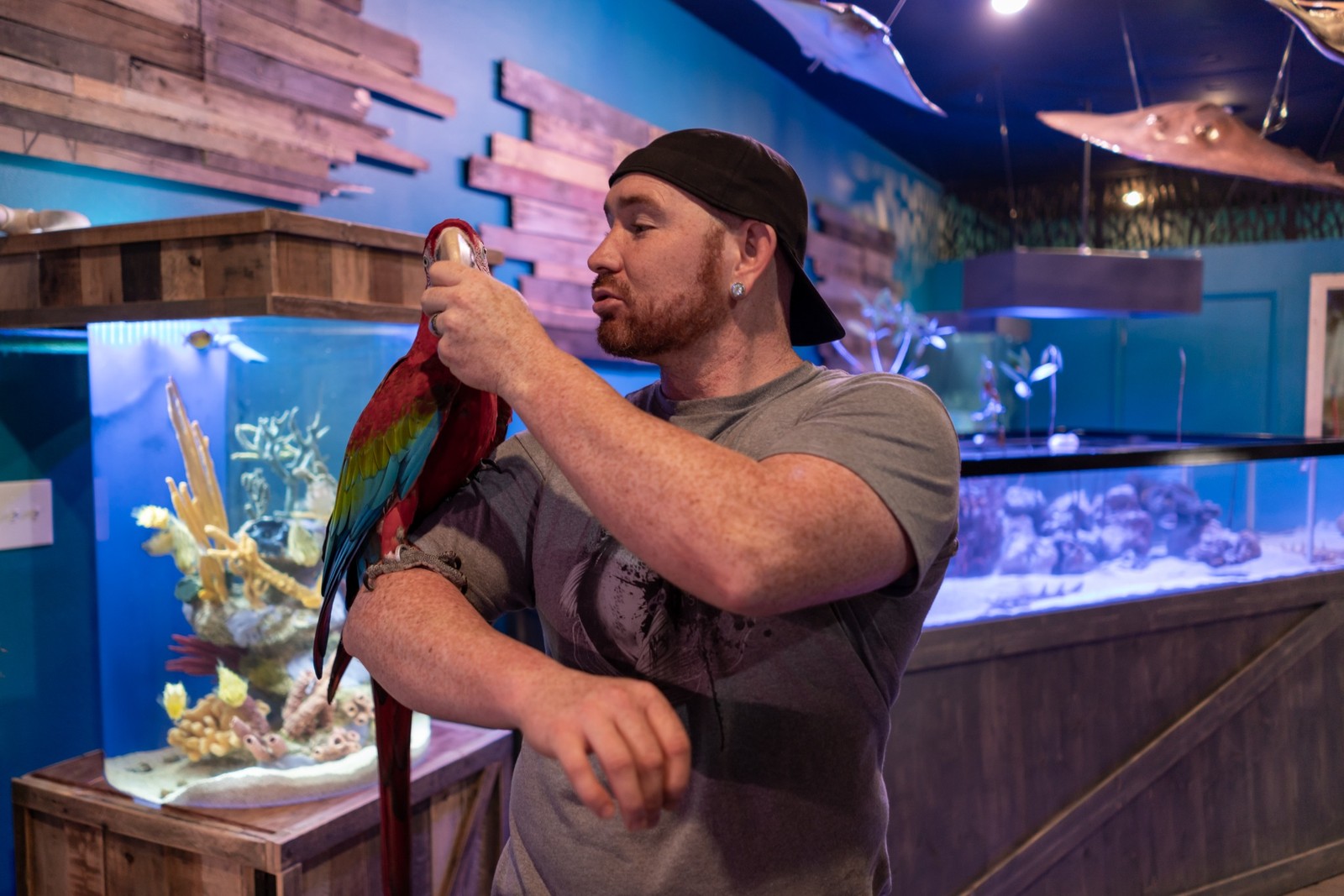
The dream had always been there in little pieces. Eric just finally decided to do something about it.
During COVID in 2020, he made the decision to purchase a building and turn a dream he'd carried for years into something real.
On paper, going from making mermaid tails to building an aquarium sounds like a fairly dramatic escalation.
Looking backward, it makes considerably more sense.
The fascination had never only been about tails. It was water. Animals. Performance. Underwater illusion. And that moment when someone looks through the glass and sees a world they weren't expecting to find.
Eric jokes that the aquarium portion wasn't planned and may have been a mistake.
The funny thing is, the pieces of it had been sitting there since childhood.
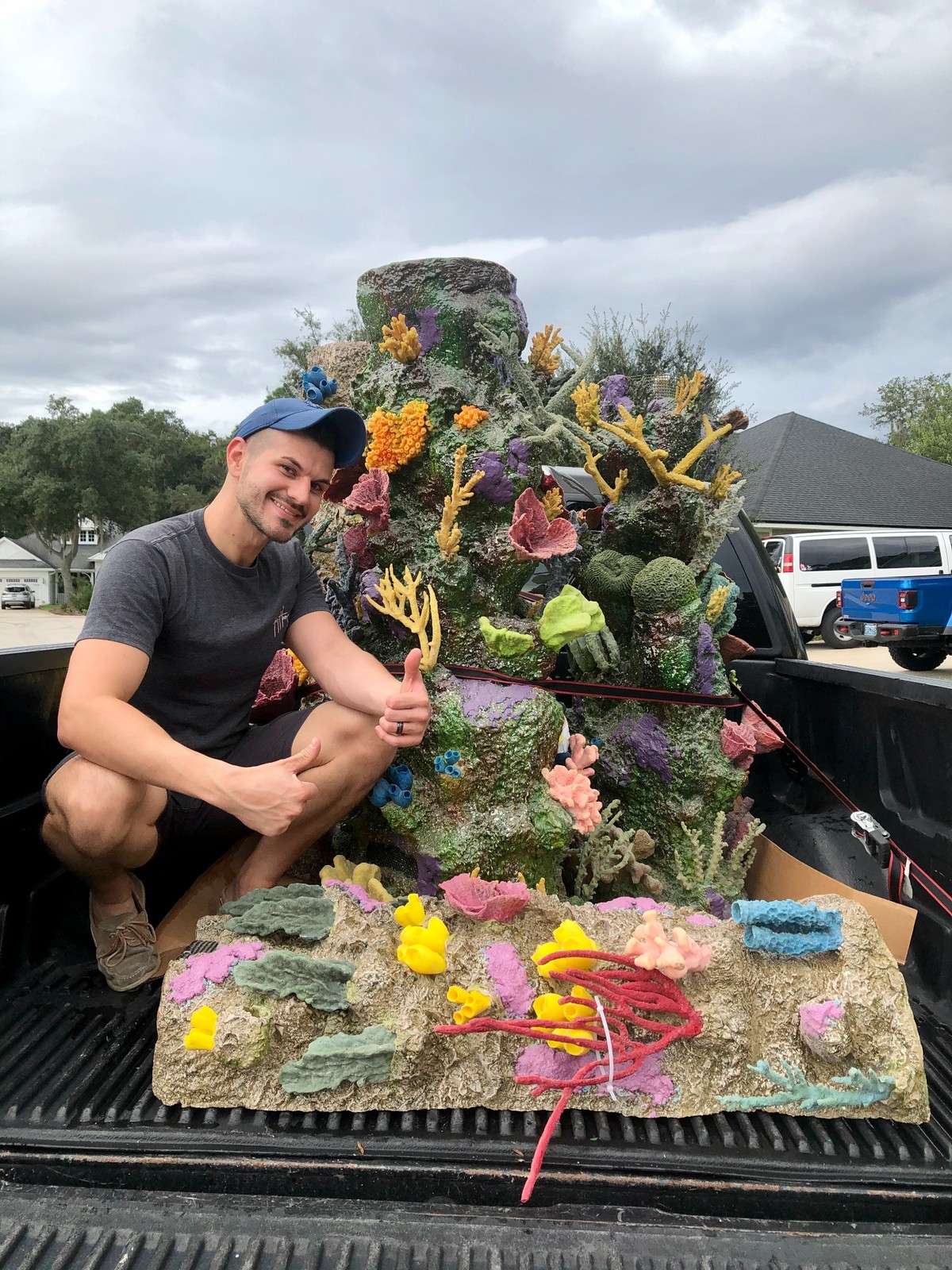
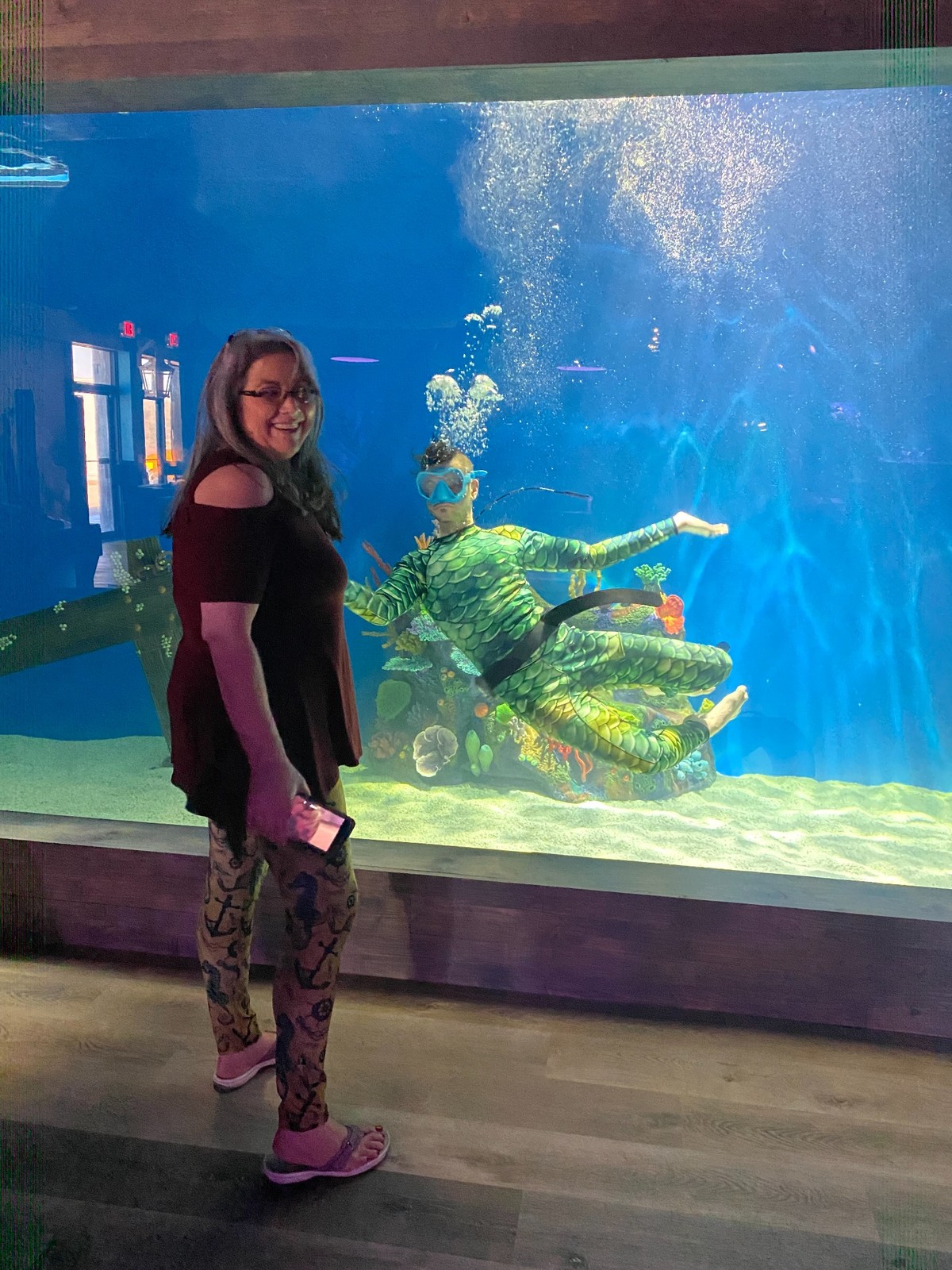
Years earlier, Candy had watched her son turn her enclosed back porch into a place to make mermaid tails.
Now there was an aquarium.
Mertailor's Mermaid Aquarium Encounter continued evolving beyond the mermaid show itself into a public aquarium centered on education, animal care, rescue and rehoming, conservation and the belief that a little bit of magic can make people care about what lives beneath the surface.
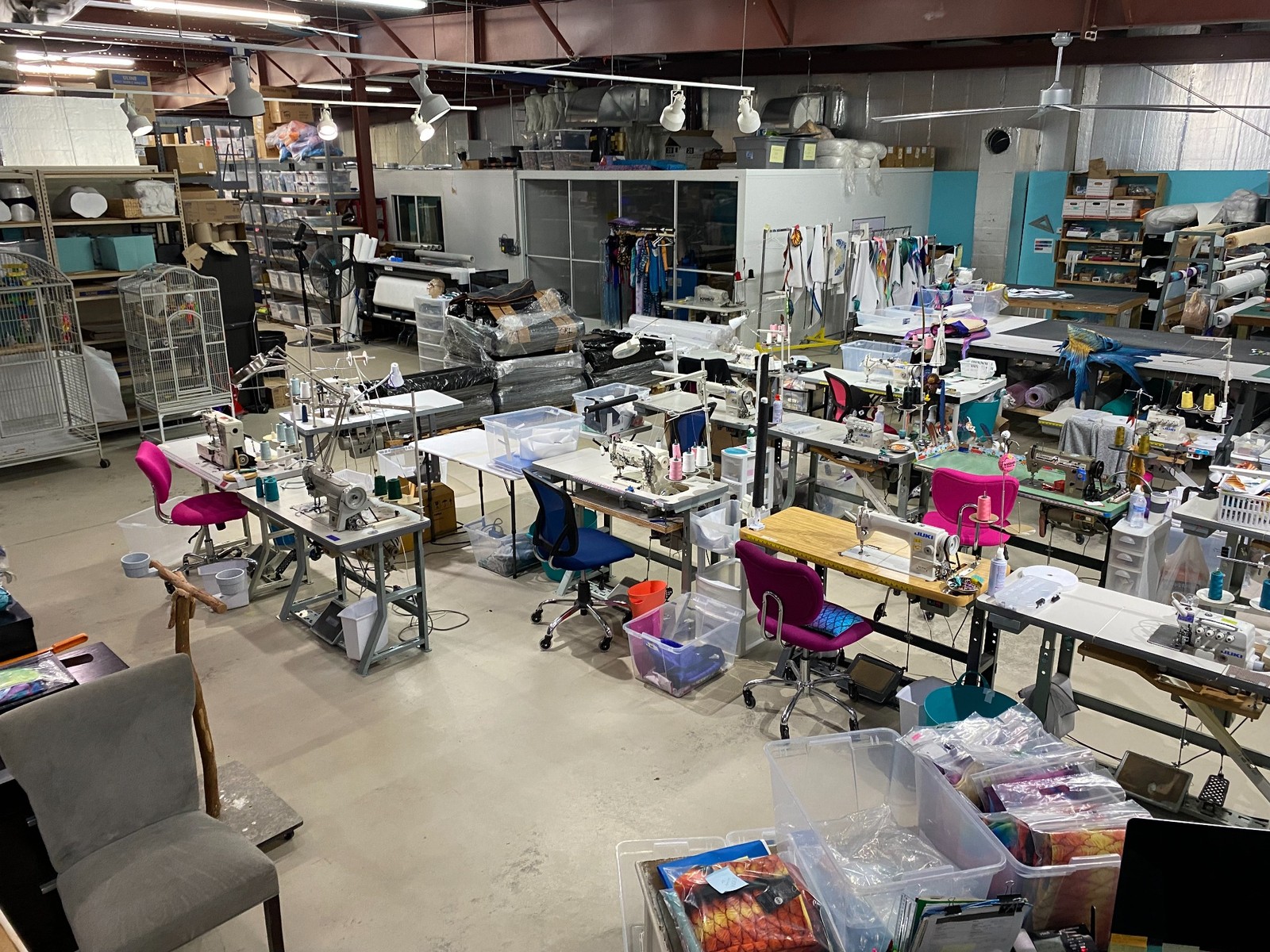
Today, Mertailor still designs and creates mermaid tails in Florida—only now the sewing machines, molds, materials and people making them fill an actual production floor.
The company has grown. The products have changed. The techniques have evolved. There have been television shows, magazine shoots, productions, inventions, thousands of customers and, somehow, an aquarium.
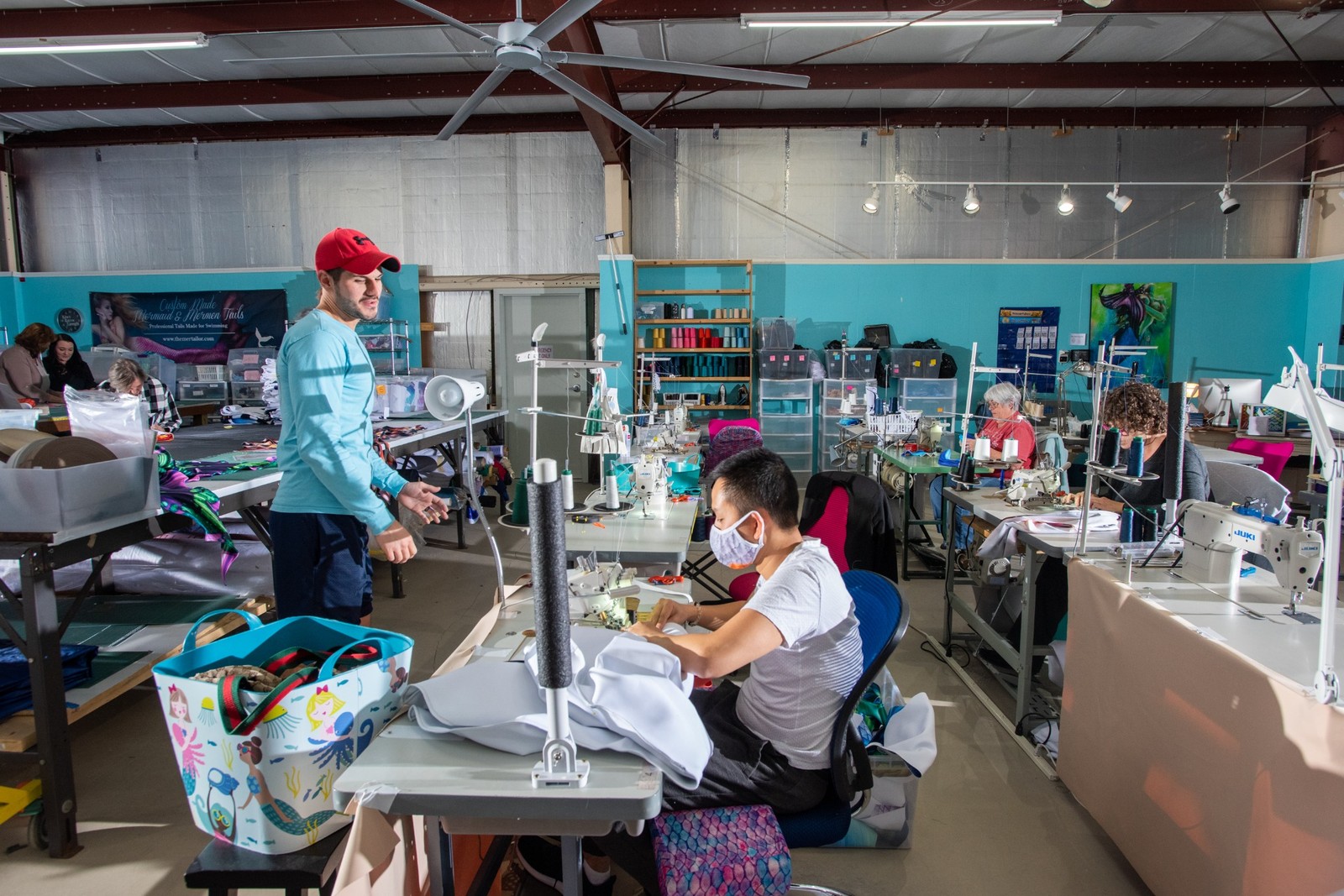
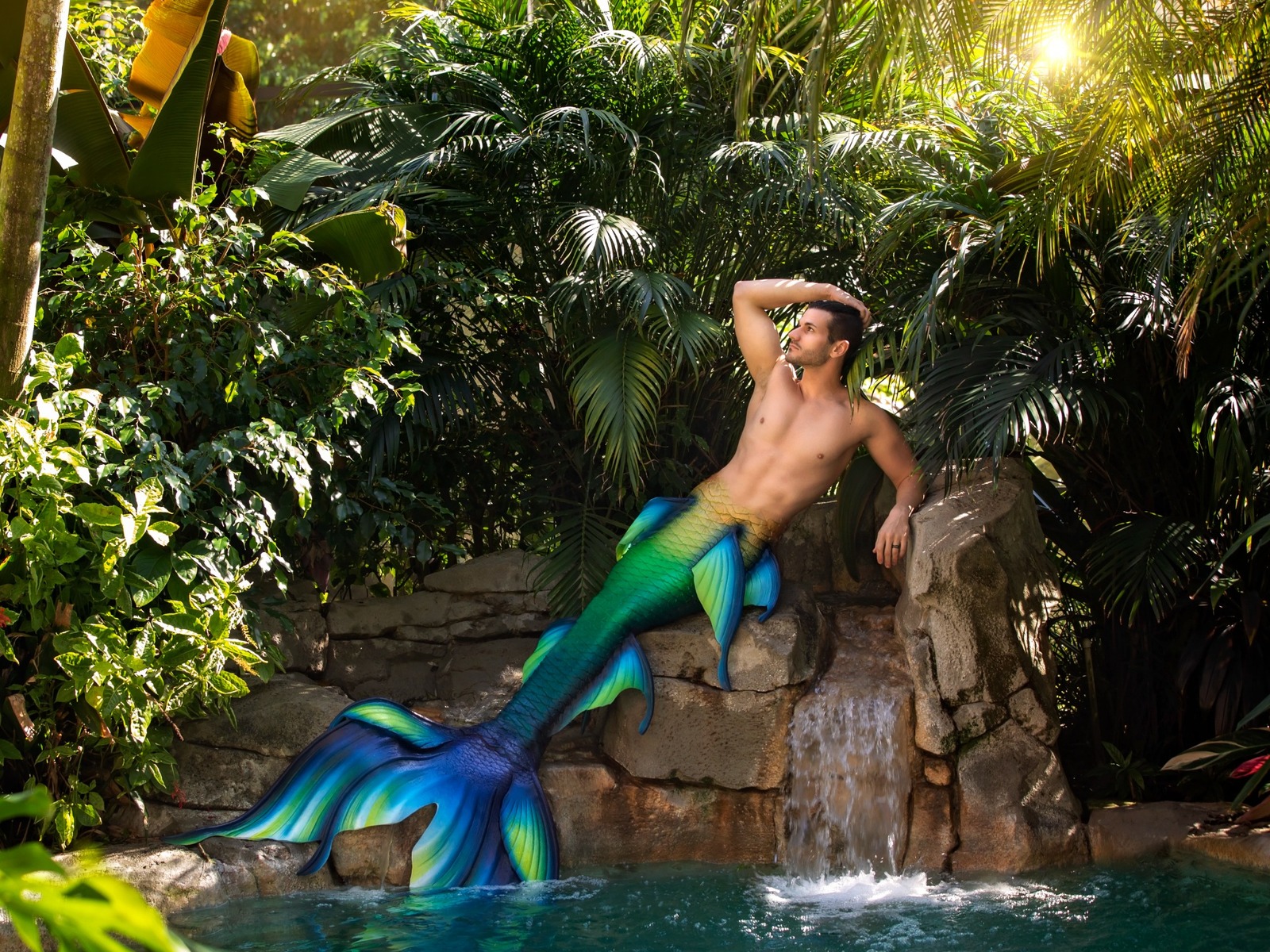
The materials got better. The tails got better. The workshop got bigger.
The website definitely got better.
Somewhere along the way there were television shows, movie sets, magazine shoots, thousands of customers, inventions, a growing team, a husband—and, somehow, an aquarium.
But that six-year-old kid sitting beside the Weeki Wachee mermaids never really went away.